

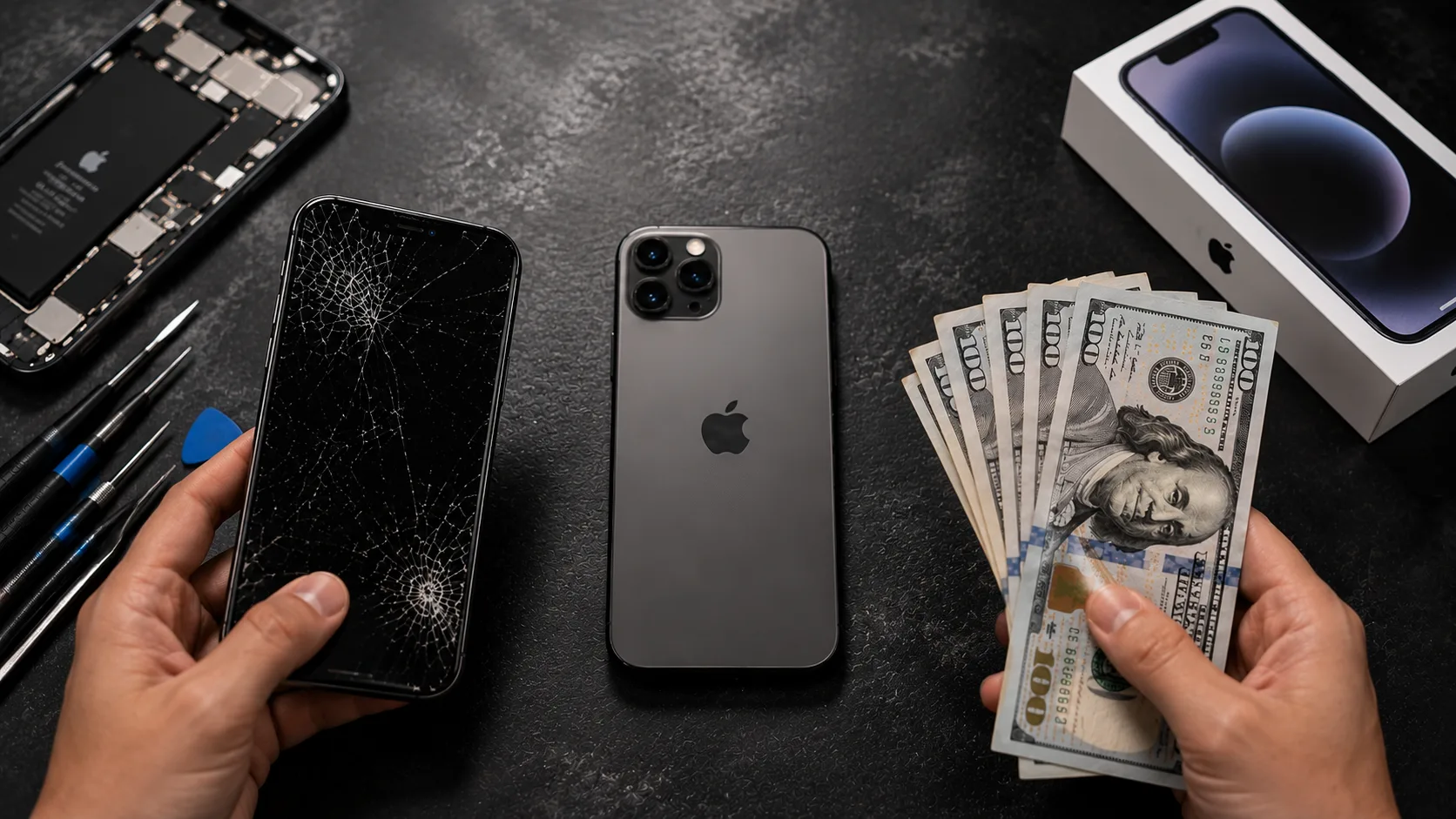
The Decision Comes Down to Math
When your iPhone breaks, you have three options: repair it and keep using it, sell it as-is (broken), or trade it in toward a new phone. The right choice depends on the phone’s current value, the repair cost, and how long you plan to keep using it.
When Repair Makes More Sense
The repair cost is less than half the phone’s working value. If your iPhone 14 Pro is worth $500 in working condition and the screen repair costs $180, repairing it gives you $320 of value back. Selling it broken might get you $150. The math is clear.
The phone is 1 to 3 years old. Phones in this age range have years of useful life left. A battery swap or screen replacement extends that life at a fraction of the cost of a new phone. An iPhone 13 with a new battery and screen will perform well for another 2 to 3 years.
You have a phone you like and don’t want to deal with setting up a new one. Transferring everything to a new phone takes time. If your current phone works perfectly aside from the one broken thing, fixing it is the path of least resistance.
The damage is limited to one component. Cracked screen, dead battery, broken charging port. These are single-part repairs with predictable costs and outcomes. The phone will work like it did before the damage.
When Selling Makes More Sense
The phone is 4+ years old and needs multiple repairs. An iPhone 11 that needs a new screen and a new battery is approaching the point where repair costs start competing with the phone’s total value. At that age, you’re also closer to losing iOS update support, which affects both security and app compatibility.
The repair involves board-level damage. If the motherboard has failed (no power, no cellular, widespread component failure), the repair can be expensive and the outcome less certain. In these cases, selling for parts and putting that money toward a replacement often makes more financial sense.
You were already planning to upgrade. If a new iPhone was on your radar anyway, selling the broken phone as-is and applying the money to the new purchase can be the better move. Broken iPhones have resale value because repair shops and refurbishers buy them for parts and boards.
What Broken iPhones Actually Sell For
This varies by model, storage capacity, and what’s broken. As a rough guide:
A broken-screen iPhone 14 (128GB) typically sells for $150 to $200 on resale platforms. A working one sells for $400 to $500. If the screen repair costs $150 to $180, you’re better off repairing and either keeping it or selling it working at the higher price.
A broken iPhone 11 might sell for $50 to $80. A screen repair might cost $100 to $120. At that point, the repair gives you a working phone worth $150 to $200, which is still a net positive, but the margin is thin.
Phones with motherboard damage, iCloud lock, or missing components sell for much less ($20 to $50 range), mostly to parts recyclers.
Where to Sell a Broken iPhone
If you decide selling is the right call, your options include Swappa (best prices for individual sellers, but requires more effort), Facebook Marketplace and Craigslist (local sales, instant cash, but watch for lowballers), eBay (wider audience, but fees eat into the price), and carrier trade-in programs (lowest offers, but the most convenient).
List the exact damage clearly in your listing. “Cracked screen, everything else works” sells for significantly more than “broken iPhone, selling as-is” with no details.
Repair Pricing at Our Shop
If you’re trying to run the numbers, here’s what helps: every iPhone repair at our Albuquerque shop starts with a free diagnostic and a firm quote before any work begins. No surprises. Screen replacements use genuine Apple parts and come with a lifetime warranty, which adds to the phone’s value whether you keep it or sell it.
If you’re on the fence, bring the phone in. We’ll tell you what the repair costs and you can make the call from there.