

Act Fast. The First 5 Minutes Matter Most
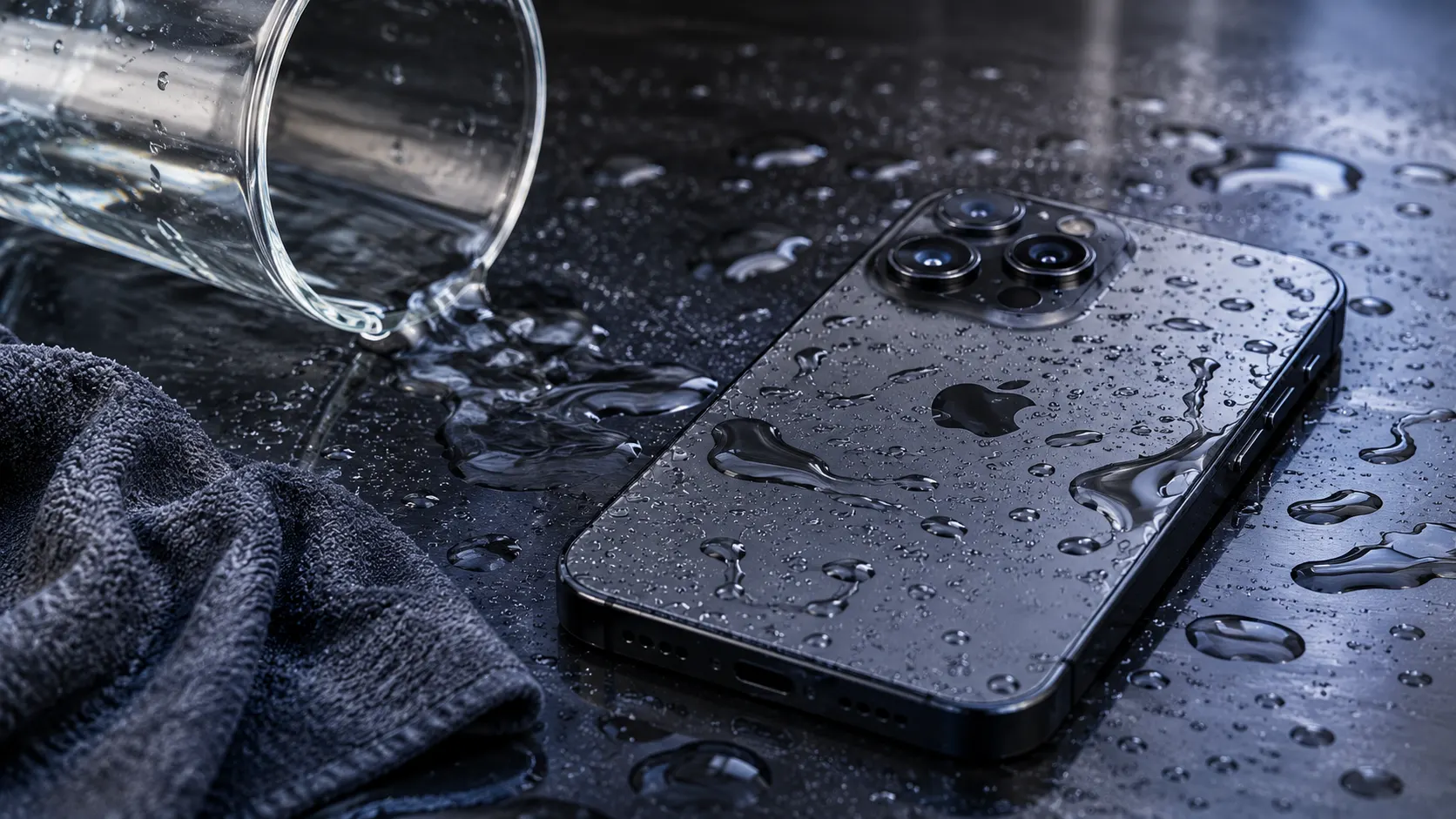
When your phone hits water, the clock starts immediately. Liquid reaches internal components within seconds and begins corroding the connections that keep your phone working. What you do (and don’t do) in the first few minutes determines whether the phone is salvageable.
Step 1: Get It Out Immediately
This sounds obvious, but people hesitate. Whether it fell in a sink, pool, toilet, or puddle, grab it out as fast as you can. Every additional second submerged increases the damage.
Step 2: Turn It Off
If the phone is still on, power it down right away. On iPhone, hold the side button and volume button, then slide to power off. On Android, hold the power button and select Power Off.
Do not try to use the phone to check if it still works. Do not unlock it, open apps, or test the touchscreen. Running electricity through wet circuits causes short circuits that can turn a recoverable situation into a dead phone.
Step 3: Dry the Outside
Use a lint-free cloth, paper towel, or clean t-shirt to wipe all visible moisture from the phone’s surface. Pay attention to the charging port, headphone jack (if present), speaker grilles, and SIM card tray. Shake the phone gently (speaker-side down) to let gravity pull water out of the ports.
Step 4: Remove What You Can
If your phone has a removable battery, take it out. Pop out the SIM card tray using the ejector pin (or a paperclip). Remove any case. The goal is to open up as many gaps as possible for moisture to escape.
Step 5: Do NOT Put It in Rice
This is the single most common piece of bad advice about water-damaged phones. Rice does not actively absorb moisture from inside a sealed device. What it can do is push starch dust and small rice particles into your charging port and speaker grilles, creating additional problems.
Instead, place the phone in a dry, well-ventilated area. A spot near a window with airflow is ideal. If you have silica gel packets (the small “DO NOT EAT” packets from shoe boxes or product packaging), place those around the phone. They absorb moisture far more effectively than rice.
Step 6: Wait Before Turning It On
This is the hardest part. Leave the phone off for at least 24 hours, ideally 48 hours. Powering it on before the internal moisture has evaporated risks a short circuit that can cause permanent board-level damage.
If you need to use a phone in the meantime, borrow one or use an old spare. The wait is worth it.
Step 7: Test Carefully
After 24 to 48 hours, try powering the phone on. If it boots up normally, check the following: speaker audio (make a call), charging (plug it in and confirm it charges), camera (take a photo with front and rear), touchscreen response across the entire display, and cellular and Wi-Fi connectivity.
If everything works, you likely avoided permanent damage. Monitor the phone over the next few days for any delayed symptoms (random restarts, distorted audio, ghost touches).
Step 8: If It Doesn’t Turn On or Behaves Strangely
If the phone won’t power on, won’t charge, or shows any of the symptoms above, internal corrosion has already started. At this point, DIY methods are over and the phone needs professional cleaning.
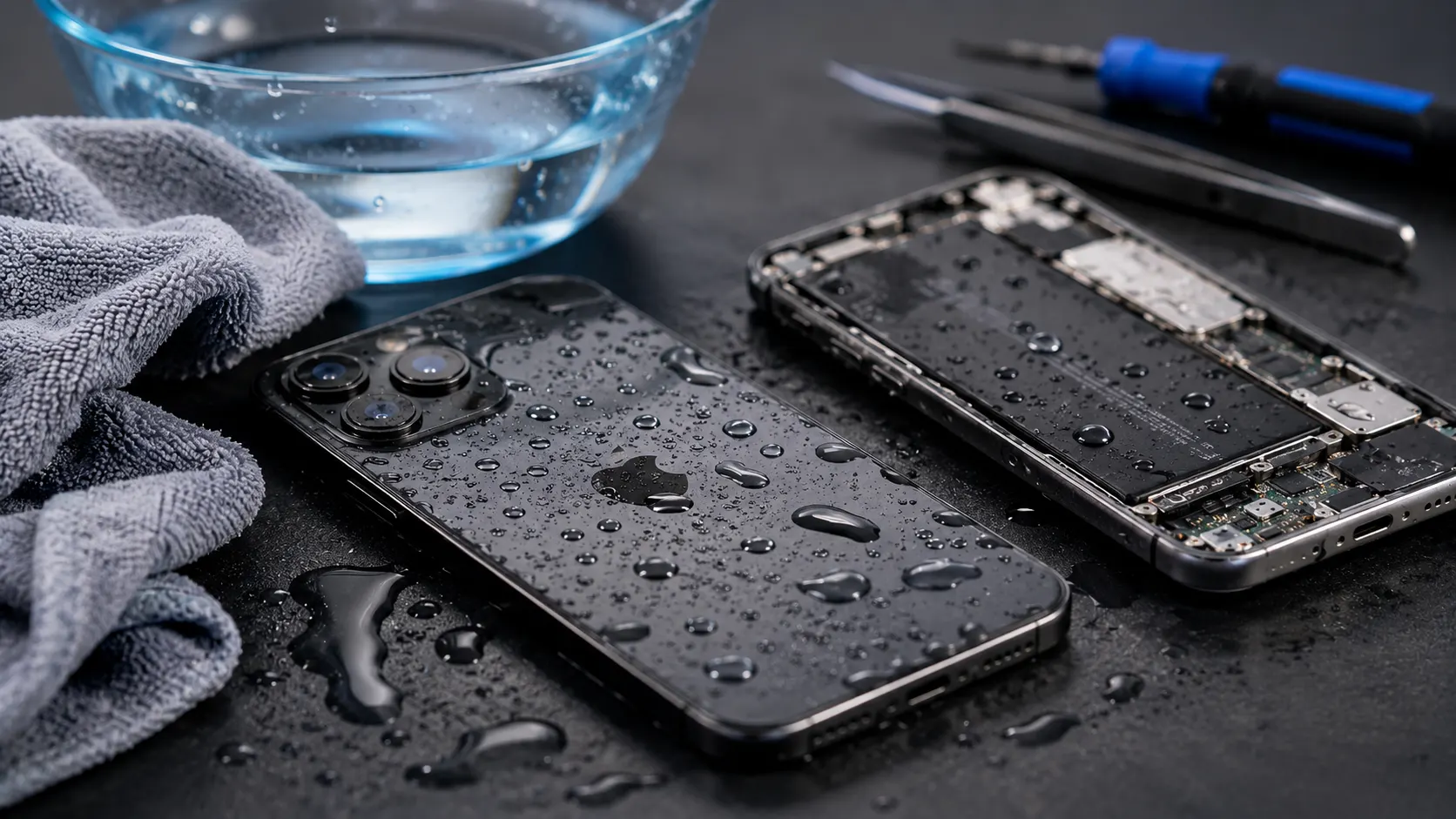
Water damage repair involves opening the phone, cleaning the logic board with an ultrasonic cleaner and isopropyl alcohol, inspecting for corroded or shorted components, and replacing anything that’s been damaged. The sooner this is done after the water exposure, the better the recovery odds.
For a deeper look at whether professional repair makes sense for your situation, read Is It Worth Going to a Repair Shop for Water Damage?.
Water Damage Repair in Albuquerque
At our shop, we handle water damage on iPhones, Samsung Galaxy phones, and other devices. We open the phone, clean the board ultrasonically, and assess the damage before quoting a repair. There’s no charge for the diagnostic.
The key factor in water damage recovery is time. The faster you get the phone to us after the exposure, the higher the chance of a full recovery. If you’re in Albuquerque and just dropped your phone in water, call us right away or walk in during business hours.