

It’s Not Just Aesthetic
When Apple switched from aluminum backs to glass starting with the iPhone 8, the reaction from most people was “great, now both sides can crack.” Fair point. But the decision wasn’t about looks. It was about functionality.
Wireless Charging Requires Glass (or Ceramic)
The primary reason for the glass back is wireless charging. Qi wireless charging works by transferring energy through electromagnetic induction between two coils: one in the charging pad and one inside the phone. Metal blocks this electromagnetic field. Aluminum, stainless steel, and titanium are excellent at shielding signals, which makes them terrible materials for wireless charging.
Glass is transparent to electromagnetic fields, so the charging coil inside the phone can communicate with the pad without interference. This is why every phone that supports wireless charging (iPhone, Samsung Galaxy, Google Pixel) uses either a glass or ceramic back panel.
Better Cellular and Wi-Fi Signal
Glass also lets cellular, Wi-Fi, and Bluetooth signals pass through more freely than metal. On the older aluminum iPhones (iPhone 6, 6s, 7), Apple had to include plastic antenna bands across the back to allow signals through. These “antenna lines” were a design compromise.
With a full glass back, the entire rear surface is signal-transparent. This improves reception quality, reduces dropped calls, and allows for more efficient antenna placement inside the phone.
MagSafe Alignment
Starting with the iPhone 12, Apple embedded a ring of magnets under the back glass for the MagSafe system. These magnets align wireless chargers, wallets, card holders, and other accessories precisely on the back of the phone. Glass is thin and smooth enough to allow the magnets to create a strong enough connection through the material.
The Tradeoff: Glass Breaks
The obvious downside is durability. Apple has progressively strengthened the back glass across generations (Ceramic Shield on the front, custom glass formulations on the back), but glass will always be more fragile than metal.
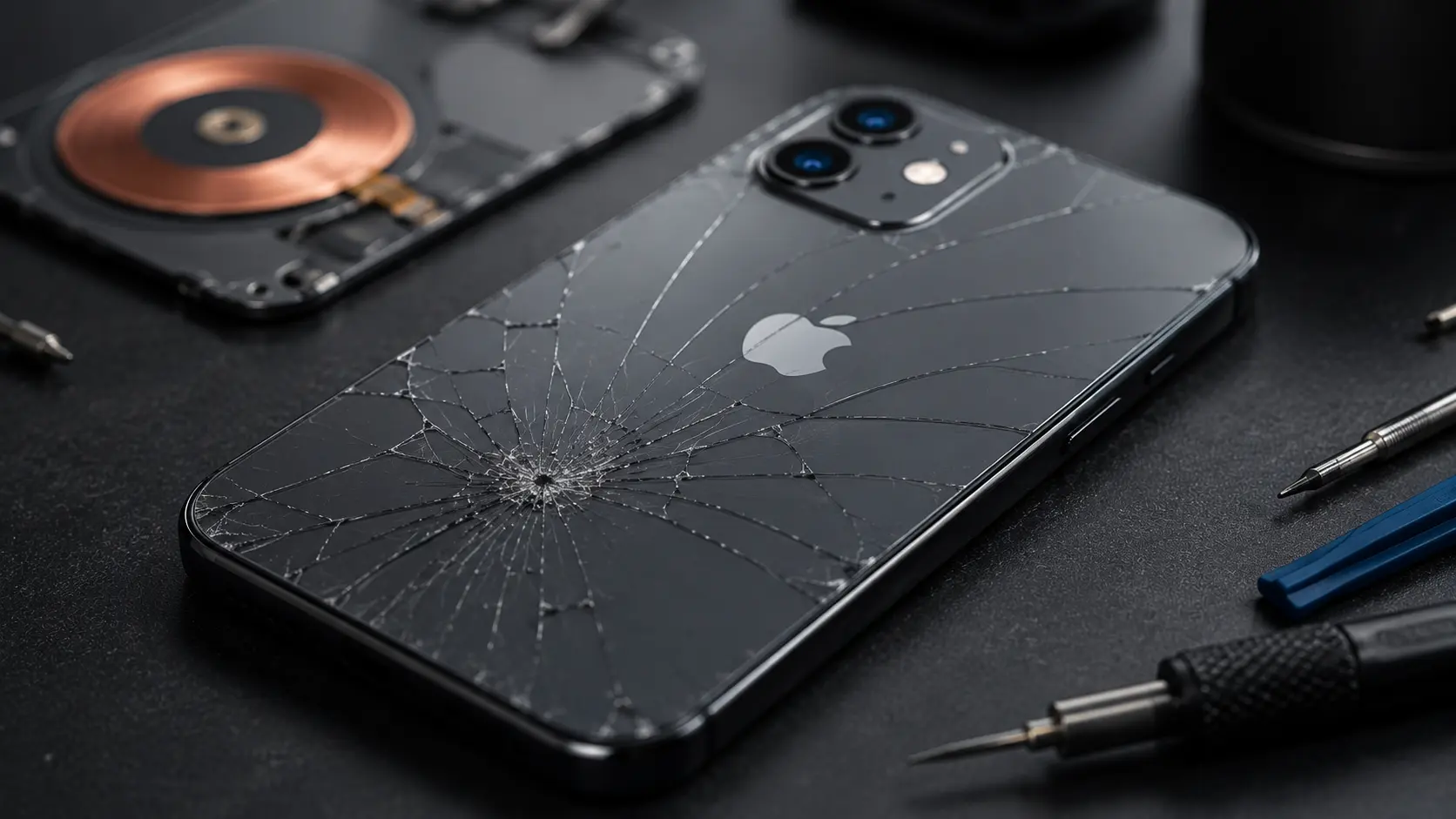
A cracked back glass is more than cosmetic. It compromises the water resistance seal, exposes the wireless charging coil and other internal components to dust and moisture, and can interfere with NFC and MagSafe functionality.
What a Back Glass Repair Involves
Back glass replacement is more involved than a screen repair. On newer iPhones, the back glass is bonded directly to the frame with strong adhesive. Removing it without damaging the internal components requires a laser separation process that heats and loosens the adhesive layer precisely.
We use this laser method at our shop. It takes longer than a screen repair (typically 1 to 2 hours) but leaves the internal components untouched. The replacement glass matches the original finish and color.
Back Glass Repair in Albuquerque
Cracked back glass is the third most common iPhone repair we do, behind screens and batteries. Many customers don’t realize it’s repairable and assume they need to live with it or buy a new phone.Every iPhone back glass repair at our shop comes with a lifetime warranty. If you’re not sure whether the crack affects anything beyond appearance, bring it in for a free check. We’ll let you know whether it’s purely cosmetic or if there’s a functional reason to repair it.